Solutions for ERP & CRM Development

Two powerful business tools, often confused, always complementary — built around how your team actually works.

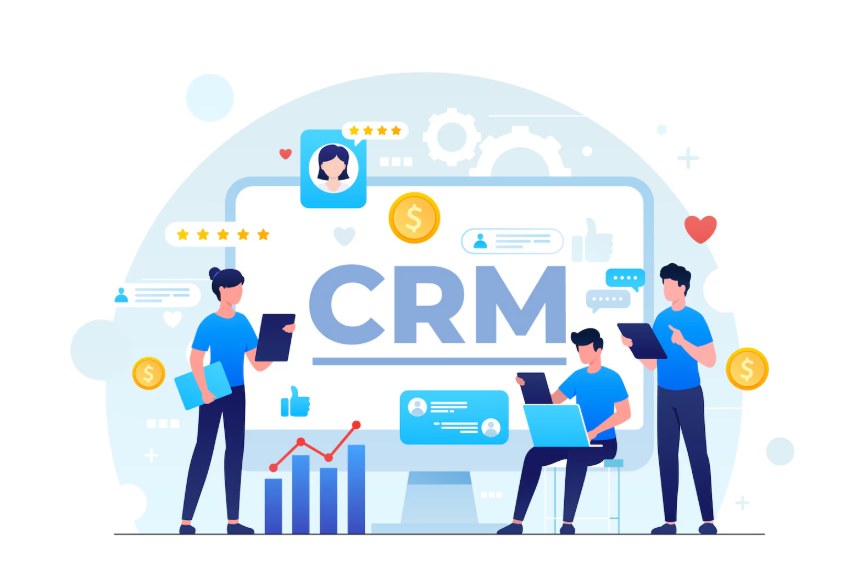
Illustration of a team managing customer relationships through a CRM dashboard

CRM (Customer Relationship Management) focuses on new and repeat customers — connecting with prospective buyers and providing reliable, consistent service to convert them. ERP (Enterprise Resource Planning) improves business efficiency by streamlining processes and analysing your team's abilities and output.

CRM gives your sales team faster responsiveness, easier lead tracking, more effective campaign management and automated repetitive tasks. ERP gives you real-time updates across teams, standardised processes, automated order processing, and better tracking of recruitment, payroll and supply chain records.

We build across categories — Human Resource, Financial, Logistics, Manufacturing Operations, Marketing and Sales — using proven platforms like Oracle NetSuite, Acumatica, Syspro and AccountMate, chosen for what actually fits your business.

What's included

What's covered under this service.

webdesignwalla.com

CodeIgniter Programming

Dedicated developers for custom CodeIgniter web application projects.

webdesignwalla.com

Custom Portal Development

Web application development tailored for small and growing businesses.

webdesignwalla.com

Web Application Development

A world-class web application built around your business needs.

webdesignwalla.com

Enterprise CodeIgniter Solutions

Custom development that goes beyond a simple web presence.

webdesignwalla.com

Corporate Website Development

Custom corporate sites built to the latest development and security standards.

webdesignwalla.com

CodeIgniter Web Development

Comprehensive, effective web application and website development.

Build, buy or customise?

The first decision is not which software to pick, but whether to build at all.

Plenty of businesses are better served by a ready-made product. Custom development earns its cost only in certain situations, and we will tell you honestly which one you are in.

A custom system is a strong fit when

  • Your process is genuinely different from the standard one, and software that forces you to change it would hurt the business.
  • You need one system to connect sales, stock, billing and reporting that now live in spreadsheets and separate tools.
  • You want to own the system and avoid per-user licence fees that grow as your team grows.
  • You have specific integrations to make: a production line, a courier, a payment gateway or a legacy database.

A ready-made platform is usually better when

  • Your needs are standard accounting, inventory or HR, and a proven product already covers them.
  • You need to be running in weeks, not months.
  • You do not want the ongoing responsibility of maintaining a custom system.
  • Your reporting and compliance formats are fixed, and a mature platform already supports them.
Why these projects fail

Most ERP and CRM projects go wrong for the same three reasons.

The software itself is rarely the problem. Projects stumble on requirements nobody wrote down, messy data carried over from old systems, and staff who were never brought along. We start with the people who will use the system every day, mapping how a lead becomes an order and an order becomes an invoice before any design begins.

We then build in phases. A first release covers the one workflow that hurts most, such as lead tracking or order processing. Your team uses it, we adjust, and only then do we add the next module. That keeps risk small and gives you something useful early, rather than one big switch-over.

Data migration gets its own plan: what is cleaned, what is archived, and how records are checked after the move. Access is role-based, so each person sees only what their job needs, and changes to important records can be traced.

How we work

A phased approach that keeps your business running.

  1. 1
    Step 1

    Map workflows

    We sit with the people doing the work and document how leads, orders, stock and invoices actually move today.

  2. 2
    Step 2

    Define scope and phases

    We agree what the first release must do, what comes later, and the milestones in writing.

  3. 3
    Step 3

    Build the first module

    The workflow that hurts most goes live first, so the team gets value early and shapes what follows.

  4. 4
    Step 4

    Migrate data and train

    Clean data is loaded in stages and checked, and your team is trained on the real system.

  5. 5
    Step 5

    Expand and support

    New modules, reports and integrations are added as the business grows, with support throughout.

Common questions

What businesses ask before starting an ERP or CRM project.

A CRM manages relationships with customers and leads: contacts, enquiries, follow-ups and the sales pipeline. An ERP manages internal operations: orders, stock, finance, HR and the supply chain. Many businesses start with a CRM and add ERP modules later.

If a standard product covers most of your process, buy it. Custom development makes sense where your process is a real advantage or no product fits. We will tell you honestly if a ready-made option would serve you better.

A focused first module, such as a CRM, can be live within a few weeks. A full ERP is delivered in phases over several months. We agree the phases and milestones in writing before starting.

Yes. We integrate with accounting software, payment gateways, email and messaging, couriers and existing databases through their APIs.

We plan the migration up front: cleaning duplicates, mapping old fields to new ones, loading in stages and checking totals afterwards, so you can trust the numbers from day one.

Your data is yours. For custom builds, ownership of the code is agreed in writing before work begins.

Free quotation request

Creating amazing digital web experiences and helping our customers.

We are the one you are looking for for your next project.

Request a quote today →